

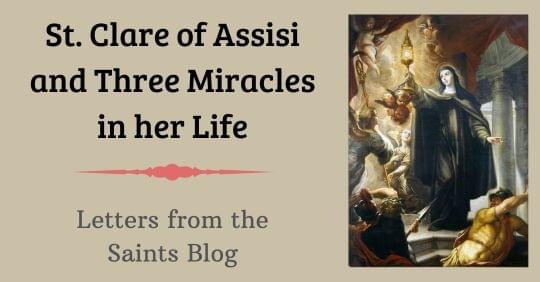
In the rolling hills of medieval Italy, amid a time of feudal unrest and opulent ecclesiastical power, a gentle yet indomitable soul emerged—a young woman who would renounce everything to follow Christ in radical simplicity and love. This was St. Clare of Assisi, the noble-born daughter who became the spiritual sister of St. Francis of Assisi and the founder of the Order of Poor Ladies—later known as the Poor Clares.
Though often remembered as a follower in Francis's shadow, St. Clare was a towering figure in her own right. She was a determined leader, a mystic, and a woman whose holiness challenged the Church to reevaluate the religious life of women. Her legacy endures not merely in the cloistered lives of her followers but in the vibrant flame of divine love she carried throughout her life.
Noble Beginnings and a Radical Choice
Clare was born in 1194 in Assisi, Italy, into a wealthy noble family. From an early age, she showed a strong sense of piety and compassion for the poor. While many young women of her class were being prepared for strategic marriages, Clare was secretly cultivating a relationship with God that would define her destiny.
At the age of eighteen, inspired by the powerful messages and example of St. Francis of Assisi, Clare made a bold decision that would scandalize her family and shock her community. On Palm Sunday in 1212, she fled her home under cover of night and met Francis at the Portiuncula chapel. There, she exchanged her rich garments for a simple tunic and took vows of poverty, chastity, and obedience. Her hair was cut—an outward symbol of her inward transformation.
When her family learned of her action, they vehemently objected. Several of Clare's relatives tried to forcibly return her to her home. Through miraculous events, they were prevented and eventually gave up trying to dissuade Clare from entering the religious life.
Take a Free 5-Day Email Course on the Saints

Learn why there are saints and just how someone is declared a saint along with much more in a free five-day email course.
Founding the Poor Ladies
Soon after her escape, Clare was joined by her sister Agnes, and eventually by many other women of Assisi who felt called to the same life. Together, they settled at the church of San Damiano. There, Clare served as abbess for over forty years.
Life at San Damiano was austere. Unlike other women religious orders, the sisters had no property, no income, and no comforts. They begged for food, wore coarse habits, and spent their days in prayer, silence, and service. But they radiated a joy that attracted women from noble and peasant backgrounds alike.
Clare’s leadership was defined by humility, yet she was unshakable in her convictions. When Pope Gregory IX tried to compel her to accept a more lenient rule that allowed some property, Clare refused. “I desire to be absolved from the obligation of being absolved from the obligation of following Jesus Christ,” she famously said. Eventually, she won papal approval for her Privilege of Poverty, making her order the first to receive such a sanction.
The Miracle of the Eucharist
Among the many stories surrounding Clare, one of the most beloved is the miracle of the Eucharist, which took place during a Saracen invasion of Assisi in 1240. As attackers approached the convent of San Damiano, the sisters were terrified. Clare, though weak and ill, took the monstrance containing the Blessed Sacrament and carried it to the window facing the advancing soldiers.
According to tradition, she prayed, “Lord, protect these sisters whom I cannot now protect.” In that moment, a mysterious light emanated from the Eucharist, dazzling the invaders and causing them to retreat.
This event is often used to highlight Clare’s unwavering faith in the Real Presence and her reliance on divine, rather than human, strength. It underscores her role not just as a contemplative, but as a spiritual warrior.
The Miracle of the Mass
Another well-known miracle in the life of Clare was based on her burning love for the Mass and Jesus in the Eucharist. For many years. Clare suffered from various illnesses. Despite the pain and difficulties she experienced, she would carry out her duties as the superior of the Poor Ladies in serving her fellow sisters through prayer, instruction, and guiding the order with her gift of holy wisdom.
On one Christmas Eve, she felt it was impossible for her to be able to attend Mass due to her being ill. As a favor to his beloved daughter, the Lord provided an image on her cell wall that showed the Mass to provide her consolation at missing Mass on such a great solemnity. Because of this account, Clare would later be made the patron saint of television.
Introduce your children to the saints

Every month your child will receive:
😇 An illustrated, personal saint story from the pen of a saint
✂ Fun hands-on activities related to the saint (games, crafts, puzzles, and more)
🧁 A saint-themed tasty and easy-to-make recipe
❤️ A service project to help put their faith into action
📖 Opportunities to read great Bible stories
The Loaf of Bread That Bled
While many know about the Eucharistic miracle and the miracle of the Mass, a much lesser-known and equally astonishing tale reveals Clare’s humility and ability to discern God's will.
It is said that one day, during her later years at San Damiano, Clare received a loaf of bread as a gift from a benefactor. Though small and humble, the bread was particularly precious during a time of famine. Clare, always attentive to the needs of others, considered breaking it in half to share with a poor family that had come to the monastery gate.
However, as she laid her hand upon the loaf to divide it, something extraordinary occurred. A drop of red liquid oozed from the center of the bread—a drop of blood.
Stunned, Clare fell to her knees in prayer. She believed it to be a sign from God, a reminder of Christ’s sacrifice and a gentle rebuke for her hesitation in giving away the whole loaf. Without delay, she gave the entire bread to the poor family, trusting that God would provide for her sisters. And, indeed, the Lord provided for her sisters even after giving away this one loaf.
This story, though not officially documented in standard sources like the Legenda Sanctae Clarae, was passed down in oral tradition among the Poor Clares for centuries. While its historical authenticity may be debated, the message it conveys is profoundly consistent with Clare’s life: total surrender, radical charity, and a mystical connection with Christ’s suffering.
Get help from the saints on your faith journey

What is Letters from the Saints?
✉️ One fascinating snail mail letter per week
😇 Real letters written by saints such as St. John of the Cross, St. Joan of Arc, St. Francis of Assisi, and St. Gemma Galgani
ℹ️ Notes that provide background information on the letter, the saint, and faith lessons
📪 A letter in your mailbox that you look forward to receiving
🖃 Printed on parchment paper and sent with a real stamp
🎁 Also makes for a fun and unique gift
Clare's Final Years
Clare spent much of her later life in physical pain, suffering from illness that confined her to bed for nearly three decades. Despite her frailty, she remained spiritually vibrant. She continued to guide her community, write letters to other Franciscan women, and even composed a Rule of Life for the Poor Ladies—the first such rule written by a woman and approved by the Church.
She died on August 11, 1253, just two days after receiving final approval of her Rule from Pope Innocent IV. Her last words were said to be: “Blessed be You, O God, for having created me.”
Just two years later, Clare was canonized by Pope Alexander IV. Her legacy has inspired not only religious sisters but also laypeople seeking simplicity, humility, and closeness to Christ.
Did you enjoy this story about St. Clare of Assisi? Sign up to receive a free saint story every week via email.
You might also like to read ...
Feast Day: August 11th
Patron saint of television
Patron saint of laundry workers
Patron saint against eye disease
Patron saint for good weather
Patron saint of needle workers
Patron saint of goldsmiths
Patron saint of telegraphs
Patron saint of gold workers
Patron saint of eyes
Patron saint of embroiderers
Patron saint of television writers
Patron saint of telephones
Patron saint of gilders